
Summary
The U.S. Supreme Court adopts a new default rule allowing independent judicial review of the FCC’s statutory interpretations in enforcement actions.
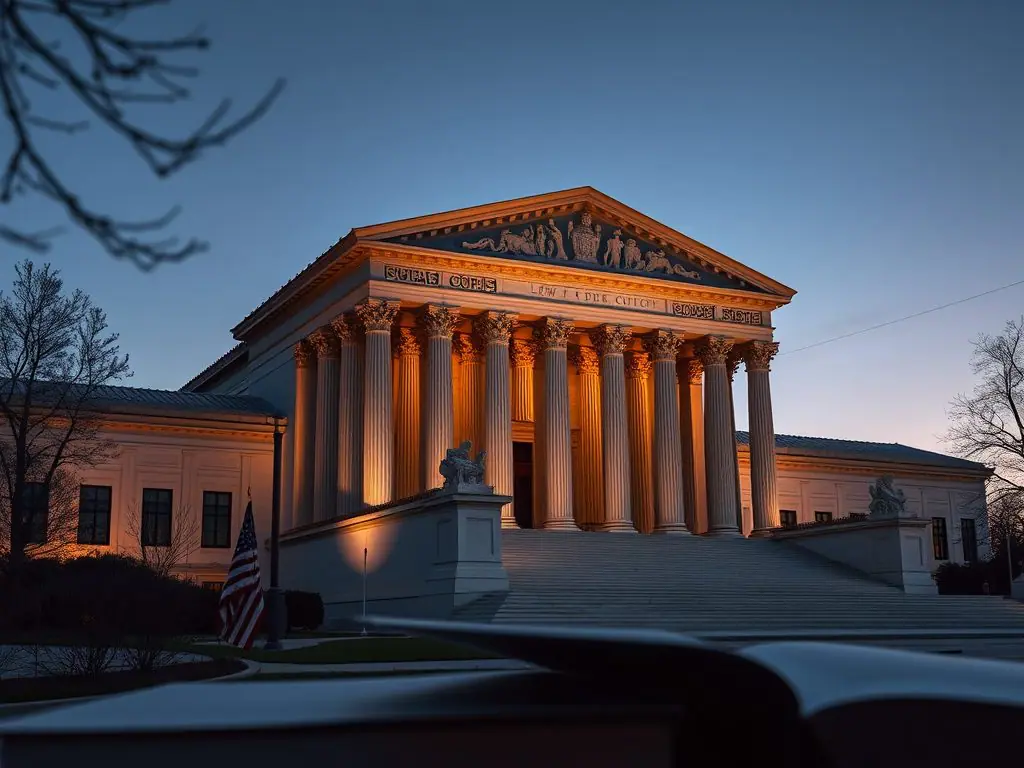
The United States Supreme Court in McLaughlin Chiropractic Assoc., Inc. v. McKesson Corp., 606 ___ U.S. ___, No. 23-1226 (2025), rejected granting absolute deference to FCC statutory interpretations and adopted a new default rule allowing independent judicial review by district courts after the pre-enforcement review of FCC rules and orders.
In McLaughlin, a medical practice company brought a purported class action law suit against a medical supplier alleging violations of the Telecommunications Consumer Protection Act (TCPA) for sending unsolicited faxes received on traditional fax machines and through online fax services. The District Court initially granted class action status, but, following a FCC declaratory order declaring an online fax service is not a “telephone facsimile machine” subject to the TCPA, the District Court decertified the class action and granted summary judgment on the faxes received by online fax service. The District Court reasoned that it was bound by the FCC’s interpretation under the Hobbs Act. The Hobbs Act provides for the judicial review of FCC and other administrative agency orders. The Ninth Circuit Court of Appeals affirmed.
The Supreme Court granted certiorari to decide whether the Hobbs Act required the District Court to follow the FCC’s legal interpretation of the TCPA. The Court held it does not.
“The Hobbs Act does not preclude district courts in enforcement proceedings from independently assessing whether an agency’s interpretation of the relevant statute is correct.” McLaughlin, slip op. at 4. “Here, therefore, the District Court should interpret the TCPA under ordinary principles of statutory interpretation, affording appropriate respect to the agency’s interpretation.” McLaughlin, slip op. at 4. The Court reasoned that the Hobbs Act gives the United States Court of Appeals “exclusive jurisdiction to enjoin, set aside, suspend (in whole or in part), or to determine the validity of . . . all final orders of the Federal Communication[s] Commission made reviewable by section 402(a) of title 47.” 28 U. S. C. §2342(1).” McLaughlin, slip op. at 4-5.
This review process allows an aggrieved party to file a petition seeking review and declaratory or injunctive relief to the Court of Appeals within 60 days of the FCC’s order. The Supreme Court referred to this process as the “pre-enforcement” review under the Hobbs Act. According to the Supreme Court, this pre-enforcement process provides clarity to regulated and affected parties concerning their rights and obligations without necessitating lower court involvement. The “pre-enforcement review process avoids the delays and uncertainty that otherwise could ensue from multiple pre-enforcement suits filed across time in multiple district courts and from subsequent appeals in the courts of appeals.” McLaughlin, slip op. at 5.
While the Hobbs Act controls the pre-enforcement process, the Court ruled that in a subsequent enforcement proceeding, unless the statute in question expressly precludes judicial review or expressly authorizes it, a party may seek independent judicial review of the FCC’s statutory interpretations in the following new default rule:
“In short, the background presumption of judicial review, the text of §703 of the APA, and the tradition and precedents allowing parties in enforcement proceedings to contest an agency’s interpretation combine to establish a clear default rule: In enforcement proceedings, district courts independently determine whether an agency’s interpretation of a statute is correct”
McLaughlin, slip op. at 10. An “enforcement proceeding” refers to the “civil or criminal proceedings for judicial enforcement” contained in the Administrative Procedure Act. McLaughlin slip op. at 6, FN 1; 5 U.S.C. § 703. Not only may a party seek review of the FCC’s interpretation of a statute under the new McLaughlin default rule, the judicial review “may also include review of whether the rule or order was arbitrary and capricious under the APA or otherwise was unlawful.” McLaughlin, slip op. at 8, FN 2.
The Supreme Court, following Loper Bright Enterprises v. Raimondo, 603 U.S. 369, 402 (2024), reasoned that a district court must “independently determine for itself whether the agency’s interpretation of a statute is correct.” McLaughlin, slip op. at 7. The Court cautioned, however, that when a party challenges an agency action in a pre-enforcement process at the Court of Appeals and loses, it could be barred by principles of ordinary estoppel or preclusion from relitigating the same question. McLaughlin, slip op. at 8, FN 3. If the challenge arises in the same circuit that heard the pre-enforcement review, a District Court may be bound by the principles of vertical stare decisis to adhere to the pre-enforcement Court of Appeals holding. McLaughlin, slip op. at 8, FN 3.
The case was reversed and remanded, “[s]o the District Court in this enforcement proceeding can decide what the statute means under ordinary principles of statutory interpretation, affording appropriate respect to the FCC’s interpretation.” McLaughlin, slip op. at 14.
The 6-3 decision was written by Justice Kavanaugh with Justices Kagan, Sotomayor, and Jackson dissenting. It was decided on June 20, 2025.