
Summary
The South Washington County Telecommunications Commission adopted the first broadband franchise in Minnesota. A broadband franchise is vastly superior to mere permitting. A broadband franchise, unlike a permit, addresses multiple issues that benefit residents and consumers, such as buildout standards, customer service standards, senior and disabled person discounts, system performance standards, consideration for use of public property, and many other public benefits.
The South Washington County Telecommunications Commission (SWCTC) has adopted the first local broadband franchise agreement in Minnesota. The agreement with Intrepid Fiber Networks was approved at the SWCTC meeting on September 25, 2025. This is the future of franchising and communications. It secures future-proof digital infrastructure for the City of Woodbury area.
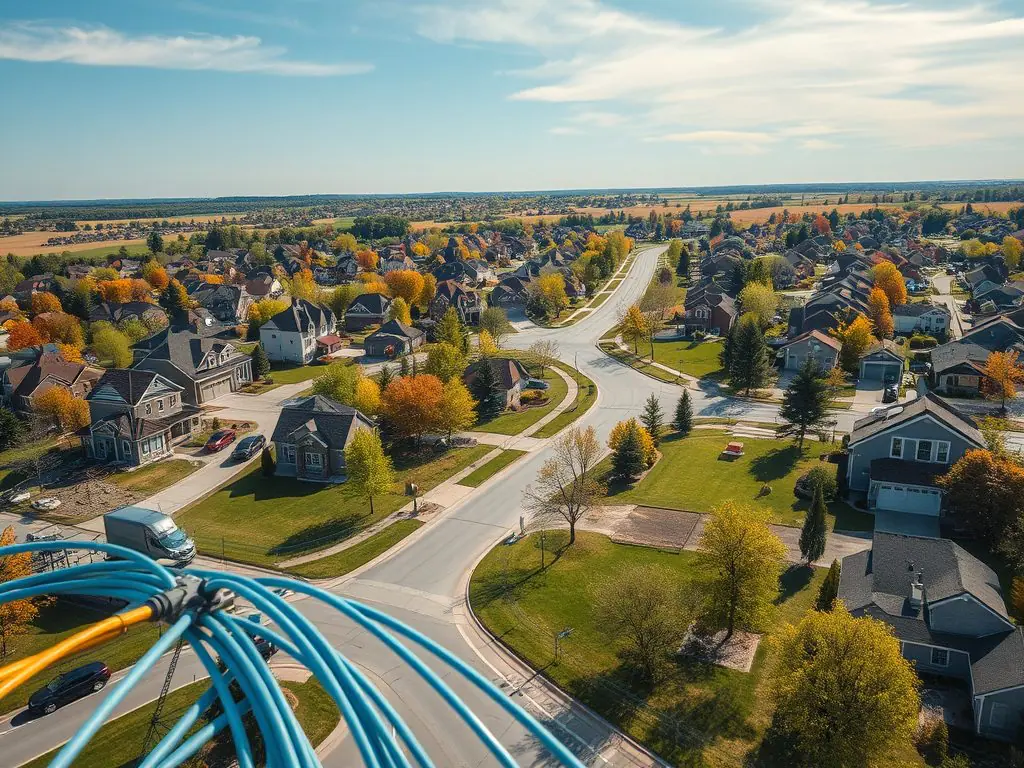
The franchise grants Intrepid the privilege to construct an open access Fiber-to-the-Home (FTTH) cable communications system in the City of Woodbury. This franchise marks a new era in franchising for local governments in Minnesota. SWCTC showed how local governments can protect the public rights-of-way, while securing important protections for its residents.
I. Franchising Superior to Permitting
Franchising is fundamentally different from standard right-of-way permitting. While permitting generally dictates how a construction project is executed (e.g., pavement repair, traffic control), franchising provides a formal, binding contract that guarantees specific public benefits in exchange for the use of public real estate.
The SWCTC’s track record of protecting area residents, spanning four decades, is proof of the effectiveness of local franchising. The SWCTC’s long-time attorney, Mike Bradley of Bradley Werner, LLC, detailed the Commission’s history of success:
“For over 40 years this commission has franchised cable communication systems on behalf of its member cities and their residents.”
The first franchise granted by the SWCTC was in 1983. Bradley then summarized the overwhelming success of this approach:
“Through franchising, the Commission oversaw a company with initially no presence in the public right of way and no customers, and we saw that company start up and ultimately become the most robust cable communication system in the area.”
Franchising by the SWCTC has also resulted in many tangible benefits benefiting residents. The success of local franchising should come as no surprise. It was a predicted outcome when the legislature decided cable communications systems should be regulated at the local level, moving away from state regulation of legacy phone systems. Bradley explained, that through local franchising:
“This Commission has made certain of many things that benefit residents, including having all residents having service, having buildout obligations, making sure all residents were covered, making sure the communication system was upgraded to meet community needs, enforcing customer service standards… and, we shouldn’t forget, also developing a robust community media center in what is now TrueLens Community Media.”
In short, franchising ensures that local governments retain the authority to hold providers accountable for key community objectives. This power is lost under mere permitting.
II. Summary of the SWCTC Broadband Franchise
The franchise granted to Intrepid Fiber Networks is a modern model for local governments authorizing open-access fiber optic cable communications systems in their jurisdictions. Key provisions secured by the SWCTC on behalf of its member city include:
Not Exclusive. The SWCTC is allowed to franchise other broadband providers serving its member cities.
Equal Access to Broadband. The franchise mandates that Intrepid provide equal access to broadband to all residents. This ensures the same quality of service to all homes and businesses in the franchise area.
Open Access System. Intrepid will build the network as a wholesale provider. Other franchised retail service providers will operate on this single, robust network, fostering competition in services and pricing for residents.
Authorization for Open Access Service Providers. All open access service providers using the Intrepid system will be allowed to sign on to this master franchise by signing a Joinder Agreement. This will allow users of the system to sign the Joinder Agreement and start providing service immediately.
Buildout Obligation. Intrepid must essentially complete construction of the entire city over a 5-year period. They must also ensure access across the entire jurisdiction.
Financial Consideration. Intrepid has agreed to pay a 5% gross revenue fee. This payment is for the privilege to use the public rights-of-way. It secures a long-term revenue source for the community.
Public Benefits & Protections. The agreement secures commitments for free or discounted broadband services for government facilities. It ensures the provision of dark fiber under certain conditions. It also includes a provision for a discount of no less than 10% for seniors and disabled persons.
III. Prompt Action by the Commission
Crucially, the SWCTC demonstrated that local franchising is an expeditious process. The SWCTC moved rapidly to review the franchise application, hold a public hearing, and negotiate and approve the agreement. When an applicant is serious about serving a community, local franchising does not create any unnecessary delay.
The Commission acted to approve the franchise just 59 days from the date they received Intrepid’s application. Franchise negotiations themselves were completed in less than three weeks. Bradley addressed critics of local regulation directly, stating:
“Any suggestion that local government is a barrier to entry is not based in reality. This commission acted, and acted very timely.”
The SWCTC’s successful and prompt process ensures that a local body of government will be “looking out for our interests.” It protects residents’ rights and ensures all residents have equal access to broadband.
Bradley Werner, LLC
Michael Bradley and Nancy Werner are nationally recognized and respected local government attorneys. Our firm is dedicated to representing local governments on broadband, cable, telecommunications, utilities, and right-of-way management issues. We have decades of experience representing municipalities on communications and utilities matters.